


About the Jewish Lawyer

Jeremy Green Eche is a branding attorney and the founder of JPG Legal and Communer, a marketplace for registered trademarks. He is the attorney of record for over 5,000 U.S. trademark registrations. In 2019, JPG Legal was ranked the #16 law firm in the United States by number of federal trademark applications filed. Eche graduated from Northwestern University School of Law on a full scholarship. Thomson Reuters selected him as a Super Lawyers Rising Star in Intellectual Property for 2021-2026.
Eche has been featured on Business Insider, USA Today, CNBC, CNN Money, NPR's Morning Edition, WIRED, MSNBC, Fox News, Forbes, the New York Daily News, HLN, The Hollywood Reporter, CNN Politics, DCist, ABA Journal, Vox.com, CNET, Mic.com, NBC News, Refinery29, the Globe and Mail, and several other news sources.
Jeremy writes a branding and growth blog called Ask a Jewish Lawyer®, and a mailing list on the same topic with over 5,000 subscribers. Before becoming a trademark attorney, he was known for owning ClintonKaine.com and hosting his comics there during the 2016 election, before selling the domain for $15,000. Then he bought HarrisWalz.com in 2020, "brat-ified" it, and sold it on Communer in 2024, also for $15,000.
Eche is based in Brooklyn in New York City. He formerly served as in-house General Counsel for Teamsters Local 922 in Washington, DC. Eche is married to Stephanie Eche, an artist and creative consultant. He has moderate Tourette syndrome.
You can contact him at info@jpglegal.com.
Client Spotlight: Argentina’s Football Trademarks for the World Cup
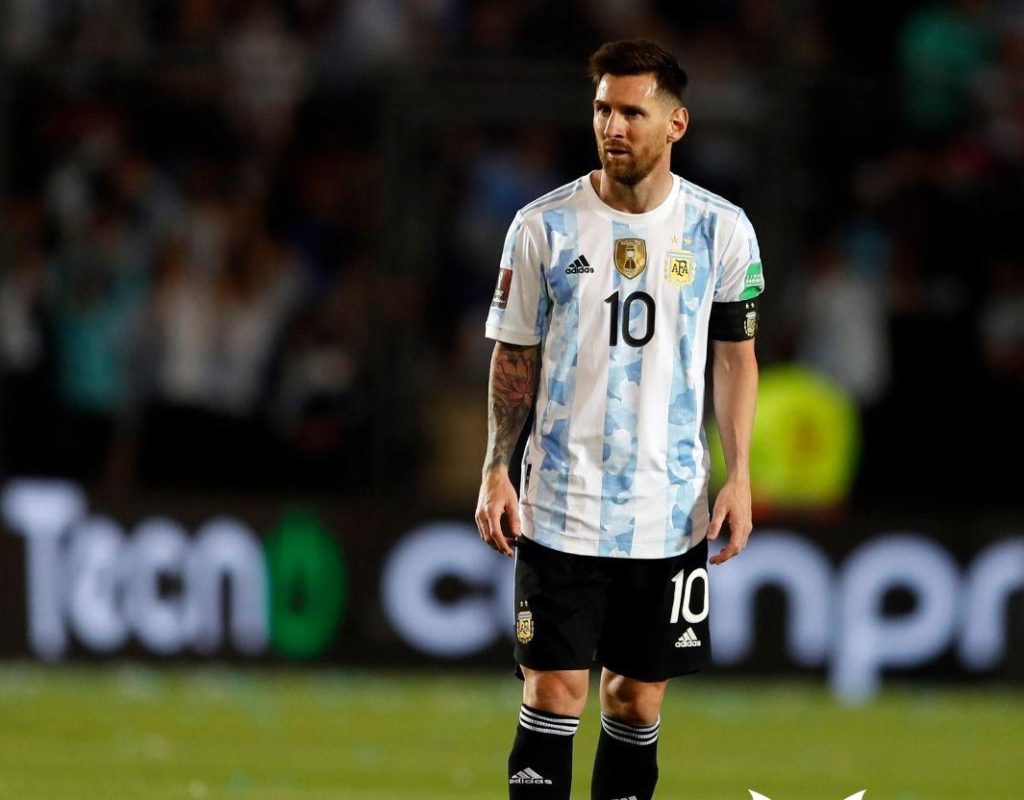
Lionel Messi in his trademark Albiceleste colors. Our client, the Argentine Football Association, is known as “Albiceleste” in the soccer world. Photo courtesy of Messi.com.
The 2026 World Cup is being held across North America this year, co-hosted by the United States, Mexico, and Canada, with most of the matches and the final taking place here in the U.S. The reigning champions, Argentina’s national team, hired us to make sure their brand was protected here before they arrived.
Last year JPG Legal registered two U.S. trademarks for the Asociación del Fútbol Argentino (AFA), which English speakers know as the Argentine Football Association. They also know it as the team of Lionel Messi, the best soccer player of his generation. Despite being 38 (the same age as me), he’s on the roster again for this year’s World Cup.
I lived in Buenos Aires for about five months during college and have liked the city ever since, though my Spanish has long since lost the little quirks that come with the Argentine accent.
The two marks I’m handling for Argentina are ALBICELESTE and FAN ZONE AFA ALBICELESTE. If you don’t follow soccer, “Albiceleste” is the nickname for Argentina’s national team. It’s Spanish for “white and sky blue,” which are the colors of both the team’s striped jersey and the Argentine flag. It’s one of the most recognizable nicknames in all of sports, and the team wearing it happens to be the defending world champion.
We filed both marks in February of 2025 and they reached registration on the Principal Register in October of the same year. That’s comfortably ahead of the tournament, in time to prevent bad actors from diluting or profiting from this vaunted brand. Below I’ll explain why a team this famous still needed to do this at all, and why getting it done before the World Cup mattered so much.
Trademark Rights Are Local, Not Global
Trademark registrations are granted on a country-by-country basis. Even if you extend your application through an international treaty called the Madrid Protocol, you still have to pay a filing fee for each country and go through each country’s application process. In the United States, you accrue common law trademark rights by offering goods and services under a brand, but these rights are weak and difficult to enforce compared to a federal trademark registration, which gives you presumed ownership of your mark in all U.S. states and territories.
The AFA could have had an Argentina-based attorney extend their Argentine trademark applications to the United States through the Madrid Protocol. But because the United States has such different rules about goods and services from the rest of the world, an initial refusal is almost guaranteed for any trademark application extended to the U.S. from a foreign country.
On top of that, the United States only allows U.S.-licensed attorneys to file office action responses on behalf of foreign trademark applicants. So the AFA almost certainly would have had to hire a U.S.-licensed attorney at some point in the process.
These two rules combine to make it a better idea to hire a U.S.-licensed attorney, like me, to file your trademark application domestically, avoiding the complications of the Madrid Protocol altogether.
Why Timing Mattered for Argentina
A World Cup on American soil pulls the Albiceleste brand into heavy commercial use in the U.S. There are jerseys, scarves, and hats to sell, along with watch parties, official fan gatherings, and player appearances happening all over the country. Unfortunately, that’s also the exact moment when counterfeiters and bootleggers come out of the woodwork. A huge event like this is a magnet for people who want to sell fake merchandise or attach your name to an event you have nothing to do with.
With registered U.S. trademarks in hand before the tournament, the AFA is in a position to fight back. A federal registration on the Principal Register is what lets a brand owner enroll in Amazon Brand Registry and take down hijacked listings and counterfeit merchandise, have U.S. Customs seize counterfeit goods at the border, stop competitors and scammers from buying ads against the brand name, and shut down bootleg “fan zones” that use the name to draw a crowd.
Without those registrations, my client would be exposed at the worst possible time, when demand is peaking and the whole world is watching. With them, they walk into the tournament holding the stronger legal position. 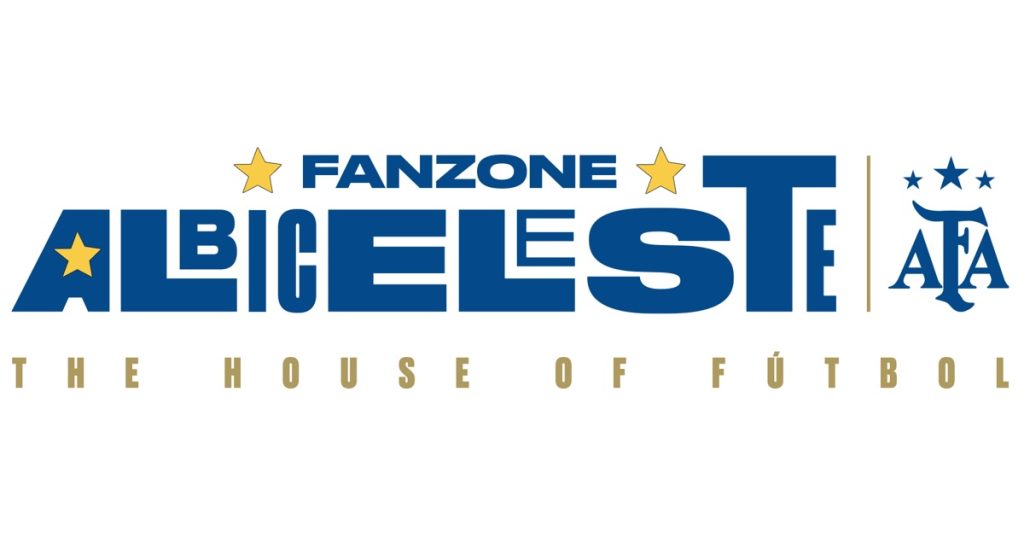
Image courtesy of our client, the Argentine Football Association.
The Two Marks We Registered
ALBICELESTE (U.S. Reg. No. 7993497, Serial No. 99052344) is the core word mark, registered as a standard character mark. That’s the format you want for your most important brand name, because a standard character mark protects the word itself regardless of the font, color, or styling it appears in. It doesn’t matter whether “Albiceleste” shows up on a jersey tag, a store sign, an Amazon listing, or a banner hanging over a watch party; the registration covers all of it. If a brand is only going to protect one thing, it should protect the word.
FAN ZONE AFA ALBICELESTE (U.S. Reg. No. 7993505, Serial No. 99052386) is also a standard character mark, and it covers the AFA’s official fan zones in the U.S. Those are the spaces where supporters can gather to watch matches, meet players at live appearances, and take part in fan events built around the team during the tournament. The AFA recently opened a headquarters in Miami, Florida and started using this term a couple of years ago for pop-up events.
There’s also a translation requirement worth mentioning here, because “Albiceleste” is a Spanish word. The USPTO requires you to translate any foreign wording in a mark so the examiner can check it against existing marks and against the rules on descriptiveness. Because of that, both registrations include a statement that “Albiceleste” translates to “white and sky blue” in English.
Why “FAN ZONE” Is Disclaimed
The FAN ZONE AFA ALBICELESTE registration includes a disclaimer of the words “FAN ZONE.” A disclaimer means the applicant isn’t claiming the exclusive right to use those particular words by themselves, apart from the mark as a whole.
The reason for it is that “fan zone” is descriptive or possibly generic for a type of venue or event for fans of a particular team or brand. Descriptive wording like that generally isn’t something trademark law lets you protect on its own, so it gets disclaimed while still being part of the larger mark. The terms that are really being protected in this mark are ALBICELESTE and AFA.
What These Registrations Actually Cover
Both marks are registered in two international classes. The identifications in Class 35 cover advertising and marketing along with a long list of retail and online store services, ranging from sports memorabilia, apparel, and headwear to trading cards and even digital memorabilia. Class 41 is the entertainment and events class, with which the registrations cover the provision of sporting events, fan clubs, live appearances by professional athletes, watch parties for televised games, and an interactive fan zone where fans can play games, show off skills, and look at displays about the sport.
In other words, these registrations protect both the merchandise side of the brand and the live experience side. This is the kind of broad coverage that a brand walking into a World Cup on foreign soil should want.
Final Thoughts
Messi’s team came to the United States to defend a world title, and through JPG Legal it also made sure its brand was defended here before it showed up.
It was an honor to help the Argentine Football Association secure the Albiceleste name in the U.S. before the first whistle. We are also finishing up the extension of both U.S. trademark applications into Canada and Mexico. Trademark registration in Canada takes forever, unfortunately.
While my home of New York City is one of the World Cup host cities this year, Argentina is not scheduled to play here unless it makes it pretty far into the tournament. So to watch their earlier matches, I’ll have to find a fan zone around here, or at least go to the Argentine bar in my neighborhood.
Learn More About Our Trademark Registration Packages.
Follow Jeremy on Twitter.
Related Posts:
Stop Sending AI Workslop to Your Lawyer
Bad Brand Names
The 2025 USPTO Trademark Fee Increase: When Is It Happening?
Clothing Trademarks: Classes and Specimens for Apparel
Toy Trademarks: Dos and Don’ts for Toy Brand Protection
Can You Sell Patented Products on Amazon?
Trademarked Fruit Names: Sweet Sugar Mango’s Success
Forbes Names JPG Legal a Top Trademark Filing Service
Scalable Vs. Non-Scalable Business: A Comparison
USPTO ID.me Verification for Trademark Filings: What Is This?
Trademark Renewal Timeline: How Often Do You Have To Renew?
Client Spotlight: Juhn Hits 500 Million Streams for One Song
Software Trademark Guide: Classes and Specimens
Legal Mistakes Every Startup Company Should Avoid Making
An Affordable Trademark Attorney
Leveraging Social Media To Elevate Your Business Strategy
How To Attract More Customers to Your Business
Protecting Your Business 101: Lawsuits, Cybercrimes, and More
How To Reinvent and Reinvigorate Your Hiring Strategy
What a Startup Needs To Be Successful
Valuing a Trademark: How Much Is A Trademark Worth?
How to Come up with a Brand Name: A Lawyer’s Advice
Amazon Brand Registry Now Accepts Pending Trademark Applications
Our Law Firm’s Favorite Work-From-Home Gear
Recession Business Good, Sticky Business Better
Our March 2020 Weekly Revenue Numbers Show When Businesses Started Freaking out Around the World
March 2020 Update on JPG Legal
Trademarking a Band or Musician Name: Goods/Services IDs
Can Flavor Flav Sue The Sanders Campaign For Promoting a “Public Enemy” Performance?
New York’s New Broker Fee Rule: Can You Get Your Broker Fee Back?
Why We Raised Some of Our Fees
The New USPTO Rule: What Do Foreign Trademark Applicants Need to Do With Their Existing Trademarks?
How Early Should You Form Your LLC?
Amazon’s Project Zero Means Getting a Trademark Is Now More Important Than Ever
JPG Legal Update: New Attorney, New Space in Dumbo
JPG Legal Is Hiring Its First Associate Attorney
Mid-2018 Update on JPG Legal’s Growth
MoMA v. MoMaCha: a Trademark Attorney’s Perspective
MarkHound and the Move to Manhattan
The Evolution of JPG Legal as a Website and as a Law Firm
The Future of the Trademark Business Model
Trademark Websites Are Lying About the Amazon Brand Registry
Should I Trademark My Amazon Brand?
Are Negligence and Recklessness the Same Thing?
Can a Restraining Order Affect Your Security Clearance?
Can Filing a Restraining Order Against Somebody Affect Your Security Clearance?
Why Are Dead Presidents the Only Dead People with Trademark Protections?
