


About the Jewish Lawyer

Jeremy Green Eche is a branding attorney and the founder of JPG Legal and Communer, a marketplace for registered trademarks. He is the attorney of record for over 5,000 U.S. trademark registrations. In 2019, JPG Legal was ranked the #16 law firm in the United States by number of federal trademark applications filed. Eche graduated from Northwestern University School of Law on a full scholarship. Thomson Reuters selected him as a Super Lawyers Rising Star in Intellectual Property for 2021-2026.
Eche has been featured on Business Insider, USA Today, CNBC, CNN Money, NPR's Morning Edition, WIRED, MSNBC, Fox News, Forbes, the New York Daily News, HLN, The Hollywood Reporter, CNN Politics, DCist, ABA Journal, Vox.com, CNET, Mic.com, NBC News, Refinery29, the Globe and Mail, and several other news sources.
Jeremy writes a branding and growth blog called Ask a Jewish Lawyer®, and a mailing list on the same topic with over 5,000 subscribers. Before becoming a trademark attorney, he was known for owning ClintonKaine.com and hosting his comics there during the 2016 election, before selling the domain for $15,000. Then he bought HarrisWalz.com in 2020, "brat-ified" it, and sold it on Communer in 2024, also for $15,000.
Eche is based in Brooklyn in New York City. He formerly served as in-house General Counsel for Teamsters Local 922 in Washington, DC. Eche is married to Stephanie Eche, an artist and creative consultant. He has moderate Tourette syndrome.
You can contact him at info@jpglegal.com.
Bad Brand Names

Today I’m going to criticize a few bad brand names that exemplify mistakes I see many business owners make when naming their brands. This is not a post about the worst brand names. Nor is it about brand names that are so bad they draw attention to themselves.
I’m simply going to talk about some very normal bad brand names that most people might not even realize are bad. I want this post to be helpful to business owners who are trying to figure out what to call themselves.
Most entrepreneurs know to avoid vulgar, offensive, or gross sounding words unless their industry calls for it, like my dog-waste-management client, Poody Doo. A lot fewer business owners know the other rules for coming up with a good brand name. I’ve written about this topic at length, but the examples of bad names in this blog post will put my rules into practice.
To be clear, if it’s not already obvious, I’m not saying companies with bad brand names, including the ones below, can’t be successful. But any success they are lucky enough to achieve will cost more and be harder gained because of all the expenses that come with choosing a bad brand name.
Bad Brand Name #1: Deviled Egg Co.

When you give your product a brand name that describes it, you restrict your growth at best and doom your business at worst. The more descriptive your name is, the worse off you are. In the case of Deviled Egg Co., they chose to name themselves the generic term for the goods they sell, adding the descriptive word “Co.” to it.
I first saw this company on Shark Tank. I’m always surprised when a business like this goes on the show and the judges tear them apart on some things, but they never say, “Why couldn’t you come up with an actual brand name?” If you can’t even think of a name to call your business, why should an investor bet that you’ll be creative enough to make it big? I’ve already criticized another Shark Tank contestant, The Fidget Game, on similar grounds.
“Let’s just call ourselves “[Item We Sell] Co.” is not a valid response to being stumped about what to name your brand. Make up a random word if you have to. Anything is better than a name that you will probably never be able to stop other people from using.
Pretending to Be the Devil You Know
From a legal standpoint, Deviled Egg Co.’s genericness means it’s virtually unprotectable. Maybe after many years of exclusive use of this name, they can protect it as a trademark someday. But that’s not something they can count on; some names are too descriptive or generic to register on the Principal Register even after extensive, years-long use.
In the meantime, anybody else who sells deviled eggs can not only target the search keyword “Deviled Egg Co.” on Google and Facebook, but they can also call themselves “Deviled Egg Co.” in their ads, or do whatever they want with that name.
Imagine if every time somebody tried to find my firm by searching for “JPG Legal” on Google, the first result was an ad paid for by a competing firm, or even a scammer, saying “Hire JPG Legal here!” and linking to a fraudulent hiring page where clients think they’re hiring my firm. This is actually pretty common online and it’s one of the most important reasons to own a federal trademark on the Principal Register in the age of the internet.
Deviled Egg Co. also probably can’t get Amazon Brand Registry protection for their name, meaning if they sell their goods on Amazon, their listings can be hijacked by counterfeiters pretending to be them. They also can’t have U.S. Customs turn away counterfeit goods at the border if these goods use the same name.
Yes, they’ve successfully registered their logo — not surprisingly, it’s just a picture of a deviled egg plus their name — but they had to disclaim every single word in the mark. This means they are not protected for the wording in the mark; only for the egg icon, the coloring, and the font. They can’t stop anybody from using their brand name on retail platforms like Amazon and Walmart, advertising spaces like Instagram and Google, business listing websites like Yelp and Google Maps, or on brick-and-mortar storefront signage.
Since the start, Deviled Egg Co. has been building more and more brand debt, a term I use to describe the growing expenses, real and potential, a company incurs over time by choosing a bad brand name early on, akin to technical debt.
This debt never leaves. Even if Deviled Egg Co. survives for another 50 years, the people who inherit their business will face the ramifications of the founders’ bad naming decision every day.
Bad Brand Name #2: HoodiePillow
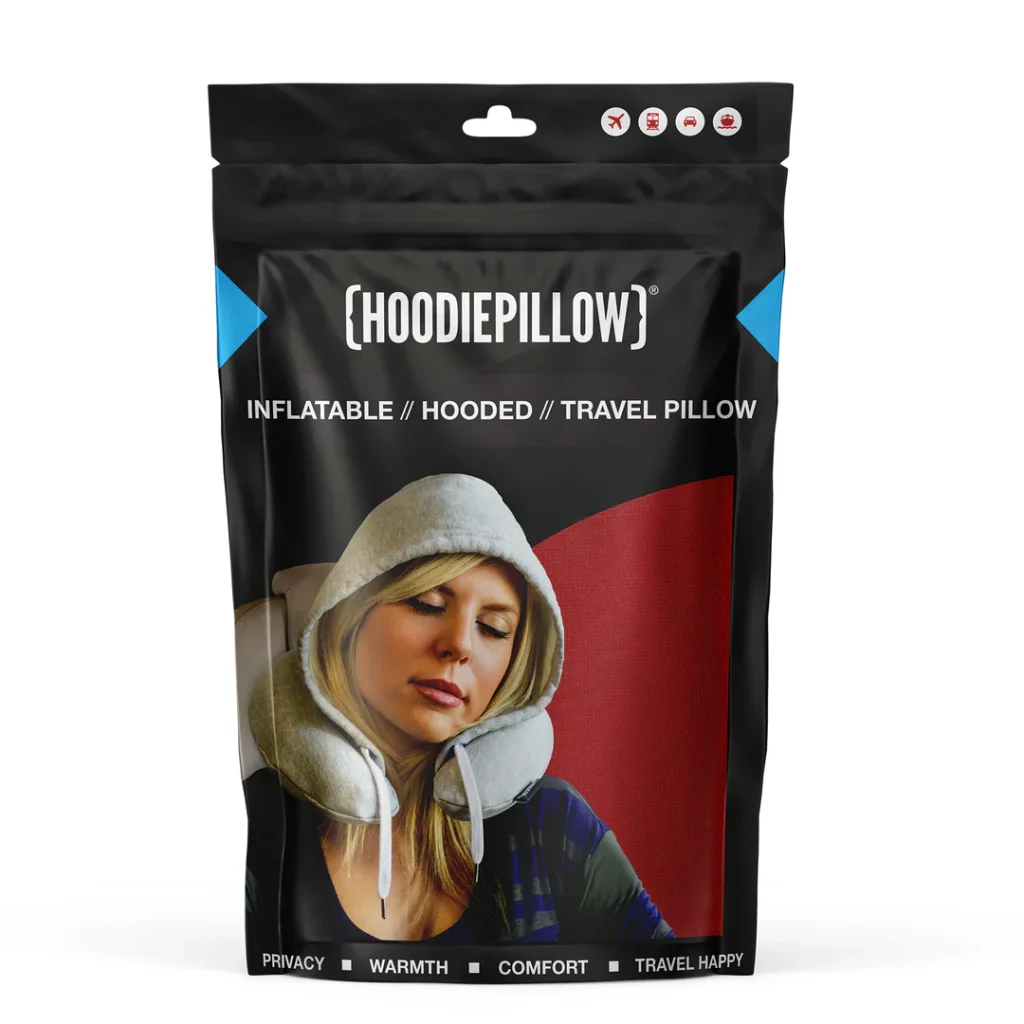
Another example of a company that fails to have a real brand name is fellow Shark Tank entrant HoodiePillow. The badness of this name is not as obvious as the badness of “Deviled Egg Co.” because they probably were the first company to call their product a HoodiePillow. So to a layperson, it seems like a distinctive brand name.
But being the first person to use a generic term for a product, even a product that you invented, does not mean you can protect that name. Trademarks are not patents and you can’t use them to protect an invention. When your competitors start knocking you off and calling their products HoodiePillows, consumers won’t be able to pick you out of the crowd because you failed to pick a real brand name for your hoodie pillows.
A common instinct I’ve noticed among founders is that they think your brand name should tell people what your product is, or at least hint at it, so you don’t have to do as much explaining to consumers. But this is a terrible instinct and founders need to fight it if they want to be successful.
Generally the less your brand name relates to your product, the better it is. If you’re thinking about calling your product a fanciful, highly protectable word like Bazingo and you’re concerned that consumers won’t know that it’s a hoodie and a pillow, just call it “Bazingo HoodiePillow.” That’s what generic terms like “HoodiePillow” are for. Anybody who wants to use a term like that to describe their products is welcome to.
As an added benefit, when your hoodie-pillow has a distinctive name and you come out with a product that isn’t a hoodie-pillow, you won’t have to call it something absurd like the “HoodiePillow JacketPants.” You can just call it “Bazingo JacketPants” and people will know both what it is and that it’s made by the same people who made the Bazingo HoodiePillow.
The makers of the HoodiePillow are lucky enough to have finally reached registration for their brand name on the Principal Register in 2018 based on a claim of acquired distinctiveness. But that was after more than five years of use of the mark in commerce.
Even if you reach registration for a descriptive name like that, you are still vulnerable to having your trademark cancelled by a competitor. They just have to claim one or both of two things:
- You were not the only company using that mark in commerce during the five year waiting period; or
- The name is generic or too descriptive to register on the Principal Register even after many years of exclusive use.
HoodiePillow Almost Got Canceled
In the case of HoodiePillow, another company actually did file a petition to cancel the HoodiePillow registration in 2023, about five years after it reached registration. The petition was withdrawn, but only after over six months of litigation.
How much do you think six months of litigation costs? Enough that if you knew this was going to happen ahead of time, you would pick a different name.
But after operating for so long, HoodiePillow had little choice but to likely spend tens of thousands of dollars fighting this very reasonable cancellation battle that they had a good chance of losing.
Next time, just pick a real brand name. It may take a little bit of work to come up with a name like “Snuggie” and get an attorney to clear it for you, but it’s worth it if your brand ends up having any level of success.
Bad Brand Name #3: Lyft
Venture-funded startups are very bad at coming up with original, viable brand names. I could have written this entire article about a certain tax-prep GPT wrapper so generic and unimaginative that its founders called it “TaxGPT.”
Yes, that’s somehow a real company and they’ve raised about $5 million so far. They’ve only gotten a trademark on the Supplemental Register, which means they probably can’t stop anybody from releasing apps in the app stores with the exact same name.
But a post about ChatGPT wouldn’t be interesting. Even the most ignorant founder should already understand why TaxGPT is a terrible name, and I want to talk about something more subtle: slight misspellings of generic or descriptive words, like “Lyft.”
Before venture capitalists poured billions of dollars into Lyft’s growth, to “get a lift” meant to get somebody to drive you somewhere, possibly by taxi. Thus, “lift” is a generic or highly descriptive term in the rideshare industry. It describes what Lyft offers.
Trademark law requires that “phonetic equivalents” like “lift” and “lyft” be treated as essentially the same word because when people hear them said out loud, they won’t hear the spelling difference.
This is why when Lyft first tried to register their brand name as a trademark in 2012, it was rejected for being merely descriptive of the services offered. Lyft’s lawyer then brute forced her way past the trademark refusal, submitting an argument consisting of—I’m not exaggerating—roughly 1,000 pages.
They had a small law firm representing them at the time. If we conservatively assume the attorney’s hourly rate was $350—on the low end for a business attorney—can you imagine how many hours she billed Lyft for filing a thousand-page argument?
Even if 975 of those pages were simply appendices, the amount of labor involved in putting the full document together must have been astronomical. I’m certain it reached, at the very least, into the low tens of thousands. And they were still very lucky to overturn that refusal. The argument could have easily been rejected.
Because of the trouble they had with their application, it took Lyft 2.5 years to reach registration. During that time they had little ability to stop other companies from offering “Lyft” apps in the app stores. Compare that to Uber, which filed its original word mark application in November 2010 and reached registration seven months later in June.
Final Lesson
Don’t take a commonly used, descriptive word in your industry and call your product or your company that word. Don’t take two or three of these descriptive words and combine them either. Your brand name should not describe any feature or aspect of your product, the intended users of your product, the way the product is made, or the place the product comes from.
Your name should also not consist solely of words that describe anything about the company or its founders or managers. This includes words like PRO, EXPERT, MAN, BROTHERS, HOUSE, FACTORY, BEST, GOOD, and sometimes colors.
Additionally, don’t take one of these descriptive words and simply change an “i” to a “y” or a “c” to a k” in order to have a unique brand name. That doesn’t work. Yes, there are giant companies with names that break these rules, but they’re giant despite these naming mistakes, not because of them.
Huge companies with descriptive names have paid dearly for their bad choices, and are still spending a fortune on litigation every year because their names are so weak and hard to protect. Sometimes the litigation leads to failure like when Nestle opposed my “Skinny Squares” brand and later my client’s Skinny Cheesecake brand.
And sometimes these lawsuits get news coverage like when Apple opposed my client’s Apple-Man trademark, which is bad press for them. “Apple” was not a descriptive name when the company only sold computers, but it became descriptive when Apple expanded into movies and healthcare.
You can use descriptive words in your name; that’s fine. You just need at least one word element in your name that is inherently distinctive, which essentially means it’s not descriptive or generic.
One great example of a mark that uses a combination of descriptive and distinctive words is my trademark law firm, JPG Legal. Did I mention you can hire my firm directly to figure all this stuff out for you?
Learn More About Our Trademark Registration Packages.
Follow Jeremy on Twitter.
Related Posts:
Client Spotlight: Argentina’s Football Trademarks for the World Cup
Stop Sending AI Workslop to Your Lawyer
The 2025 USPTO Trademark Fee Increase: When Is It Happening?
Clothing Trademarks: Classes and Specimens for Apparel
Toy Trademarks: Dos and Don’ts for Toy Brand Protection
Can You Sell Patented Products on Amazon?
Trademarked Fruit Names: Sweet Sugar Mango’s Success
Forbes Names JPG Legal a Top Trademark Filing Service
Scalable Vs. Non-Scalable Business: A Comparison
USPTO ID.me Verification for Trademark Filings: What Is This?
Trademark Renewal Timeline: How Often Do You Have To Renew?
Client Spotlight: Juhn Hits 500 Million Streams for One Song
Software Trademark Guide: Classes and Specimens
Legal Mistakes Every Startup Company Should Avoid Making
An Affordable Trademark Attorney
Leveraging Social Media To Elevate Your Business Strategy
How To Attract More Customers to Your Business
Protecting Your Business 101: Lawsuits, Cybercrimes, and More
How To Reinvent and Reinvigorate Your Hiring Strategy
What a Startup Needs To Be Successful
Valuing a Trademark: How Much Is A Trademark Worth?
How to Come up with a Brand Name: A Lawyer’s Advice
Amazon Brand Registry Now Accepts Pending Trademark Applications
Our Law Firm’s Favorite Work-From-Home Gear
Recession Business Good, Sticky Business Better
Our March 2020 Weekly Revenue Numbers Show When Businesses Started Freaking out Around the World
March 2020 Update on JPG Legal
Trademarking a Band or Musician Name: Goods/Services IDs
Can Flavor Flav Sue The Sanders Campaign For Promoting a “Public Enemy” Performance?
New York’s New Broker Fee Rule: Can You Get Your Broker Fee Back?
Why We Raised Some of Our Fees
The New USPTO Rule: What Do Foreign Trademark Applicants Need to Do With Their Existing Trademarks?
How Early Should You Form Your LLC?
Amazon’s Project Zero Means Getting a Trademark Is Now More Important Than Ever
JPG Legal Update: New Attorney, New Space in Dumbo
JPG Legal Is Hiring Its First Associate Attorney
Mid-2018 Update on JPG Legal’s Growth
MoMA v. MoMaCha: a Trademark Attorney’s Perspective
MarkHound and the Move to Manhattan
The Evolution of JPG Legal as a Website and as a Law Firm
The Future of the Trademark Business Model
Trademark Websites Are Lying About the Amazon Brand Registry
Should I Trademark My Amazon Brand?
Are Negligence and Recklessness the Same Thing?
Can a Restraining Order Affect Your Security Clearance?
Can Filing a Restraining Order Against Somebody Affect Your Security Clearance?
Why Are Dead Presidents the Only Dead People with Trademark Protections?
